Russian X-101 Missile Found in Poland Identified as Newly Manufactured
Polish prosecutors confirmed that the X-101 missile that fell on November 20 was produced in late 2024. Despite authorization to shoot it down, aircraft failed to intercept it due to weather.
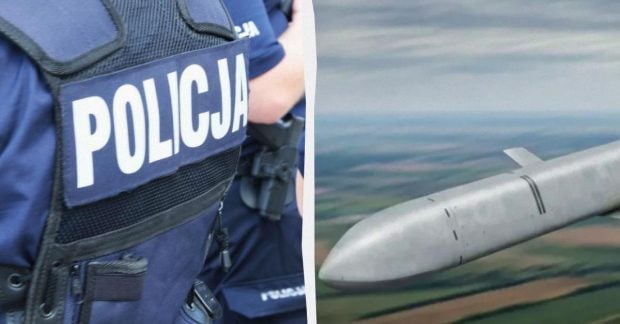 🚨Events
Photo: UNIAN
Key points
- The X-101 missile was manufactured in October-November 2024.
- A Swedish Gripen pilot had permission to engage but was hindered by weather.
- Engine fragments weighing hundreds of kilograms were scattered over several kilometers.
The incident involving the crash of a Russian X-101 cruise missile in the Polish village of Nowy Lipowiec on November 20 has seen new developments. The Lublin District Prosecutor's Office has concluded its initial investigation at the site, determining the origin and production date of the munition. This event has caused significant concern within NATO due to the violation of airspace and the potential risks to civilians.
Technical Specifications and Production Date
Prosecutor Andrzej Boroń reported that the recovered missile is virtually brand new—it was manufactured in the fourth quarter of 2024, likely in October or November. Investigators managed to identify not only the production period but also the specific manufacturing plant. According to prosecution representatives, the missile exploded mid-air, causing debris to scatter over a large area with a radius of several kilometers.
Among the recovered fragments, the missile's engine, weighing several hundred kilograms, drew particular attention. Despite the extensive damage to the structure, specialists gathered enough evidence for a full identification of the object. Fortunately, the falling debris in the Nowy Lipowiec area did not result in any casualties or injuries among the local population.
Aviation Response and Adverse Weather Conditions
Lieutenant General Ireneusz Nowak, Commander of the Polish Armed Forces Operational Command, disclosed details of the attempted interception. During the incident, Polish F-16 fighters and Swedish Gripen jets were scrambled. A Swedish pilot had official authorization to destroy the target but was unable to fire due to extremely difficult weather conditions that prevented visual identification of the missile.
In total, the Polish military tracked 11 potentially dangerous objects that day, three of which crossed the state border. The airspace protection operation also involved a Saab 340 early warning aircraft and a Dutch MRTT tanker. Although the aviation forces could not shoot down the missile in the air, its explosion and subsequent fall in an unpopulated area prevented a tragedy.
Source UNIAN — unian.ua/weapons/rosiyska-raketa-h-101-shcho-vpala-v-polshchi-zovsi… ↗
Read next
 🧠AI Analysis
Hungarian PM's Stance on Russian Aggression and Transcarpathian Visit: Regional Implications
Hungarian Prime Minister Peter Magyar explicitly called Russia an aggressor and confirmed plans to visit Transcarpathia amidst recent drone attacks.
 🇺🇦Ukraine
Munich to Repurpose Former BMW Offices as Housing for Ukrainian Refugees
The city of Munich has leased part of a former BMW administrative complex to accommodate 600 refugees starting mid-December.
 🧠AI Analysis
DTEK Grid Restoration Scale: National Context and Regional Impact
DTEK reported restoring electricity supply to over 3.5 million families within a week amid ongoing shelling of energy infrastructure.
 🧠AI Analysis
ATP Finals Review: Alcaraz's Dominance and Veterans' Struggles
Carlos Alcaraz won the ATP Finals undefeated, cementing his status at the top of men's tennis amidst growing competition gaps.
 🇺🇦Ukraine
Russian aviation industry reports test flight of second serial MC-21
The Irkutsk Aviation Plant has conducted the first flight of the second serial MC-21 airliner, a project central to Russia's import substitution strategy.
 🇺🇦Ukraine
Hungarian Prime Minister Announces Visit to Transcarpathia to Support Ukraine
Peter Magyar has expressed his intention to visit the Transcarpathian region and clearly stated his position regarding Russian aggression against Ukraine.